Limited liability business structures offer a big benefit to business owners: Greater protection by separating your personal assets from your business assets.
Starting a limited liability company (LLC) isn’t as simple as filling out a quick form. There are some decisions you’ll need to make upfront to distinguish your limited liability business, which may affect the type of entity you can set up. The laws governing LLCs are set up at the state level, so we’ll get familiar with the regulations and types of structures in North Carolina.
Forming a Limited Liability Company (LLC) is a key step for entrepreneurs looking to protect personal assets, optimize taxes, and formalize their business. In North Carolina, LLCs are especially popular due to their flexibility, cost-effectiveness, and straightforward legal requirements. Whether you're starting fresh or expanding across state lines, understanding how LLCs work in North Carolina is essential.
What Is a North Carolina LLC?
A North Carolina Limited Liability Company (LLC) offers liability protection for business owners while allowing pass-through taxation. This means your business income is taxed once—on your personal return—rather than being subject to corporate tax. NC LLCs are governed by the North Carolina General Statutes and are ideal for small businesses, freelancers, family-owned companies, and startups.
Need bookkeeping for your new LLC? Keeping clean books from day one protects your liability shield and makes tax time easy. Explore Our Bookkeeping Services →
Why Start an LLC in North Carolina?
North Carolina offers several advantages for LLC formation:
Low startup costs (Articles of Organization filing fee is relatively low)
Fast and simple online filing through the NC Secretary of State
No residency requirements for owners or managers
Strong local economy with access to major markets
These benefits make NC a business-friendly environment for entrepreneurs.
3 Ways To Distinguish Your LLC or Limited Liability Business
There are a few traits of limited liability businesses that can affect how you’re taxed, how you’re managed, how you’re regulated and how you can set up your business structure.
1. Single-Member versus Multi-Member
This should be an easy one to identify. Are you the only person who owns your business? Then you’re a single-member LLC! If there are two or more owners of your business, then you’re a multi-member LLC.
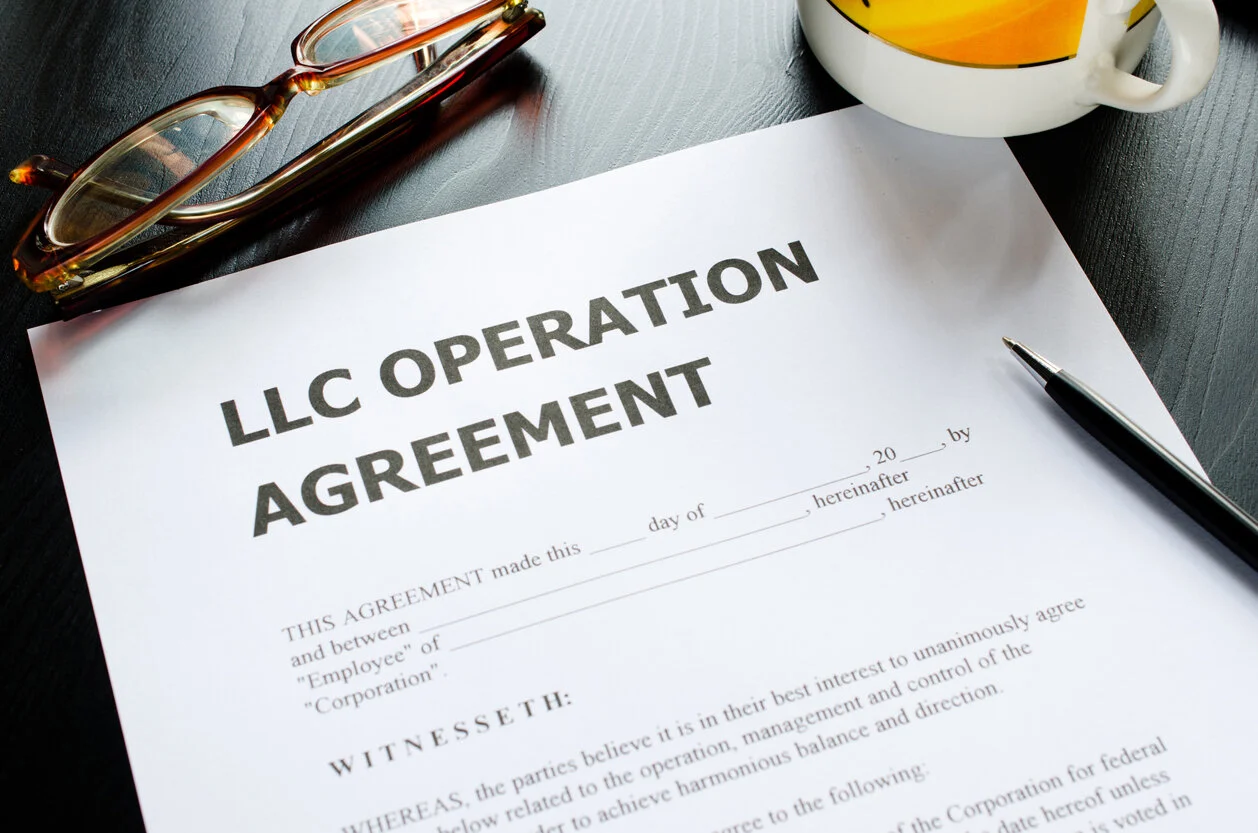
This distinction is particularly important when it comes to taxes. The IRS treats a single-member LLC as a disregarded entity, which means your business income will be part of your personal tax return.
If you’ve got at least one other member, your LLC files taxes as a partnership with Form 1065, the Return of Partnership Income. North Carolina isn’t a community property state, so if spouses own an LLC together, they can’t be treated as a disregarded entity.
Whether you’re a single-member or general partnership LLC, you can choose to be taxed as a corporation instead by filling out Form 8832.
2. Member-Managed versus Manager-Managed
If you’re an owner and you’re running the show at your business, then your LLC is member-managed. In your operating agreement, state law also allows you to designate someone else to run your business operations. If that’s your setup, that person is your LLC’s manager, which makes you manager-managed. So far, so good, yeah?
3. Domestic versus Foreign
This one can be confusing! Remember that LLCs are set up at the state level. That means in the Tarheel State, a domestic LLC is one that’s organized under North Carolina state law and operates in the state. A business with a similar structure set up in any other state, the District of Columbia or another country is therefore a foreign LLC.
There are different business registration processes for domestic LLCs and foreign LLCs in North Carolina. Be sure you set up the correct type, and register your business as a foreign LLC in any other states where you transact business.
At the federal level, agencies may refer to companies operating under international law as “foreign-owned LLCs” to avoid confusion with the state-level definition.
As your LLC grows, a Fractional CFO can help you build financial systems without the cost of a full-time hire. Learn About Our Fractional CFO Services →
5 Types of Limited Liability Business Structures

In North Carolina, you’re not just an LLC or bust. There are five types of business structures that provide limits to liability for members or partners. These business types are outlined in the North Carolina Limited Liability Company Act, Uniform Partnership Act and other general statutes. They’ve got unique traits that differentiate each of them.
1. Limited Liability Company
A limited liability company is owned by its members and run by managers, who can also be the members. It can have as few as one owner (a single-member LLC), or be a multi-owner LLC. That distinction affects how taxes flow through to you, unless the LLC elects to be taxed as a corporation instead.
The member or members’ liability is limited to capital contributions, or the investments they make in the business.
2. Limited Partnership
There are two types of owners in a limited partnership: limited partners and general partners. There must be at least one limited partner and general partner, and the general partners are the ones running the day-to-day business. Taxes flow through to the partners.
Your liability depends on what type of partner you are. If you’re a limited partner, your liability is limited to your capital contributions, the same as an LLC member. If you’re a general partner, you have unlimited liability.
3. Limited Liability Limited Partnership
There are two types of owners in a limited liability limited partnership: limited partners and general partners. There must be at least one limited partner and general partner, and the general partners are the ones running the day-to-day business. Taxes flow through to the partners.
In this case, the liability of both limited partners and general partners is limited to their capital contributions.
4. Limited Liability Partnership
A limited liability partnership (LLP), or registered limited liability partnership (RLLP), is formed with only general partners, who both own and run the business. Taxes flow through to the partners.
The general partners do get some relief in an LLP. Their liability is limited to capital contributions for their partner’s or partners’ professional services. However, all partners still have unlimited liability for general obligations.
5. Professional Limited Liability Company
A professional limited liability company (PLLC) applies only when the professional services you offer are licensed by a licensing board for you to operate. Licensed professionals include folks such as attorneys, architects, public accountants, doctors and dentists, therapists, and veterinarians. Be sure you provide your certification to the Secretary of State.
Licensee members are the owners of PLLCs, and designated managers run the day-to-day business. Taxes flow through to the members.
In a PLLC, you have unlimited liability for the professional service you’re providing. For example, you can be sued for malpractice if you’re a doctor.
North Carolina LLC Requirements
To legally operate as an LLC in NC, you must:
File Articles of Organization with the NC Secretary of State
Appoint a Registered Agent (can be you or a third-party service)
Maintain an Operating Agreement (recommended, even if not required)
File an Annual Report and pay the required fee
Comply with local business license and zoning laws
Tax Considerations for NC LLCs
LLCs in North Carolina benefit from flexible taxation, but still need to comply with local and federal tax obligations:
Pass-through taxation for single-member and multi-member LLCs
Employer withholding tax if you have employees
Sales and use tax registration if selling taxable goods or services
Optional S-Corp election to reduce self-employment taxes (if eligible)
It’s wise to consult a tax professional to determine the best structure for your situation.
LLCs in North Carolina have specific tax treatment options — including the option to be taxed as an S-Corp. We handle business tax filings for NC and SC LLCs. See Our Business Tax Services →
Other Types of LLCs in the US
North Carolina doesn’t have some types of limited liability business structures that are offered in other states. Some of these are new, or available, in very few states, but it’s worth knowing they exist if you do business outside North Carolina:
Family limited partnership
Series LLC
Restricted LLC
L3C, or low-profit limited liability company
Anonymous LLC
Determining Your Limited Liability Structure
Even if you already have an LLC established, it can be confusing to identify all the properties of your business, or whether you’re using the best type of structure for your business. If you want a hand, the team at Certum Solutions would love to help you.
Common Questions About NC LLCs
How much does it cost to form an LLC in NC?
$125 filing fee for Articles of Organization, plus optional registered agent or service fees.
How long does it take to form a North Carolina LLC?
Online filings are typically processed within 3–5 business days.
Can I be my own registered agent in North Carolina?
Yes. As long as you have a physical NC address and are available during business hours.
Do I need an Operating Agreement?
While not legally required, it’s highly recommended to outline management and ownership responsibilities.
Let Certum Help You Set Up & Maintain Your LLC
Our clients enjoy white-glove support through every step of the business formation process, whether you’re registering an NC LLC or expanding nationwide. Need help deciding if an LLC is right for you? Schedule a free 30 min. consultation with Certum Solutions and get clarity on the best structure for your business goals.
Choosing Certum as your partner comes with perks, we are partners with CorpNet to offer seamless business entity registration, EIN setup, compliance monitoring, and sales tax registration across all 50 states.
Related Pages and Services That We Offer:
Get a free quote (it takes 2 minutes) Use our free quote builder to get an idea on pricing for bookkeeping, accounting, and tax services for your business! It’s free to use and we don’t collect your information when you do. Book a free consultation if you’d like to proceed and we’ll get you onboarded!
Related Blogs on LLC Businesses for the U.S.:
https://www.certumsolutions.com/library/oh-boi-the-new-report-your-llc-or-corporation-needs-to-file
https://www.certumsolutions.com/library/unapplied-cash-payments-in-quickbooks?rq=LLC
Sources + More Links:
https://www.irs.gov/businesses/small-businesses-self-employed/limited-liability-company-llc
https://www.l4sb.com/blog/what-is-domestic-limited-liability-company/
https://dos.ny.gov/articles-organization-domestic-limited-liability-company-0
north carolina limited liability company | limited liability company north Carolina | llc in north Carolina | north Carolina llc | federal taxes | annual report | llc formation | forming an llc | north Carolina secretary | sole proprietorship | carolina secretary of state legal documents | llc in northhow to obtain an llc
llc meaning
how to create an llc
how to obtain an llc
starting llc
nyc l