
Vendor-Neutral · We Work in Odoo, QuickBooks, Xero & Zoho
Thinking About Odoo? First, Figure Out If You Actually Need It.
Most "should I switch to Odoo" advice comes from firms that only sell Odoo. We're not one of them. Here's a straight evaluation of Odoo ERP (cost, fit, alternatives, and who should walk away) from accountants who work in all the major platforms.
✔️ US based team✔️ We'll say "stay put" when that's right✔️ No implementation quotaQuick Verdict
Best for revenue
$1M–$30M
Best Fit
Complex ops
Wrong for
Simple services
Real Cost Driver
People, not license
Z
Zoho Silver Partner Certified Zoho Partner
O
Odoo Directory Firm Find an Accountant listed
US
500+ Businesses All 50 states
★
QuickBooks Elite Top 2% ProAdvisor
X
Xero Bronze Partner Certified advisors




The 30-Second Answer
Quick Summary
Odoo ERP is a strong fit for US businesses roughly $1M–$50M in revenue with operational complexity — manufacturing, distribution, multi-channel e-commerce, or multiple entities — that need accounting, inventory, sales, and CRM in one connected system. It's the wrong tool for simple service businesses, who close faster and cheaper on QuickBooks Online or Xero. This guide, written for US businesses evaluating Odoo in 2026, breaks down Odoo vs QuickBooks, real cost, the main alternatives, and who should not switch — from a firm that works in all of them. If you'd rather just get a recommendation, book a free 30-minute consultation.

Start Here
What Is Odoo ERP, Really?
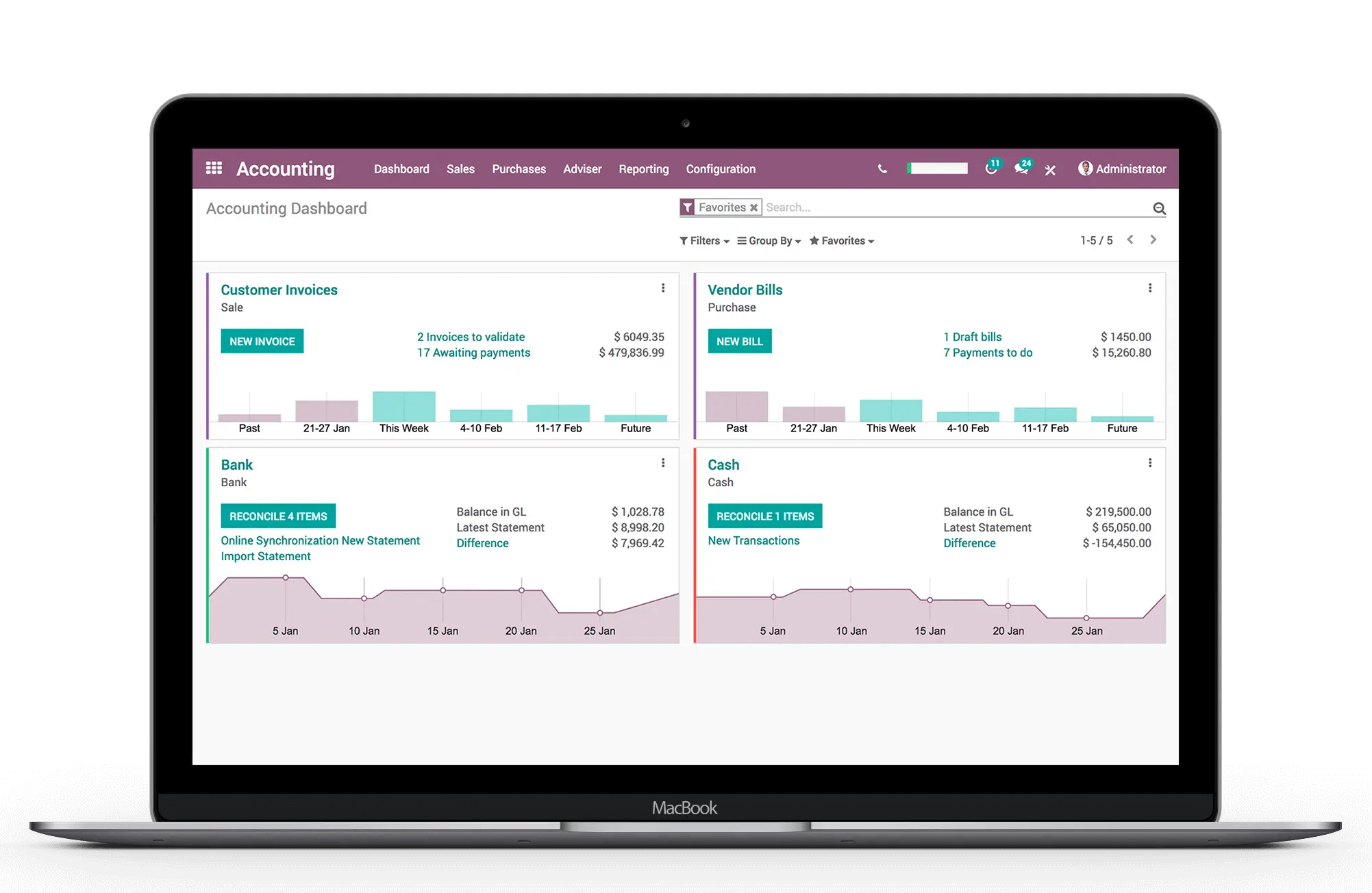
Odoo is a full enterprise resource planning (ERP) suite — one database connecting accounting, inventory, manufacturing, purchasing, sales, CRM, HR, and e-commerce. That's the core difference from QuickBooks or Xero, which are accounting-first tools. In Odoo, accounting is one module among dozens, and entries post into the ledger automatically from the operational modules around it.
That architecture is Odoo's biggest strength and its most common failure point. When inventory, sales, and purchasing are configured correctly, your books update in real time without manual re-entry. When they're not, the accounting module fills with suspense balances and mis-postings whose root cause lives in a product-category setting three modules away. This is why an Odoo deployment is really two projects: the operational build and the accounting integrity behind it.
Is Odoo an ERP or a CRM?
Odoo is an ERP that includes a CRM as one module. Companies often adopt Odoo specifically to connect their sales pipeline directly to inventory and accounting — but the CRM alone is not the reason most businesses take on a full ERP.
The Core Decision
Odoo vs QuickBooks: Which One Fits Your Business?
This is the comparison most of our evaluation calls come down to. Neither is "better" in the abstract — they solve different problems. The honest test: is your pain an accounting problem or an operations-feeding-bad-numbers problem?
| Factor | QuickBooks (Online / Enterprise) | Odoo ERP |
|---|---|---|
| What it is | Accounting-first software | Full ERP; accounting is one module |
| Best when | Accounting is your primary need | Operations must connect to the books |
| Inventory / manufacturing | Advanced inventory in Enterprise; add-ons otherwise | Native, deep, multi-module |
| Multi-entity | Limited (stronger in Intuit Enterprise Suite) | Native multi-company & consolidation |
| Speed to run | Faster close, simpler day-to-day | More powerful, more to maintain |
| Real cost driver | Subscription + bookkeeping | Implementation + ongoing accounting upkeep |
| Right-sized for | Most SMBs; service businesses | $1M–$30M with operational complexity |
Our rule of thumb: if your pain is accounting, stay on QuickBooks Online or QuickBooks Enterprise with better configuration. If your pain is disconnected operations producing numbers you can't trust, Odoo or a comparable ERP earns the evaluation.
Want this decision made for your specific operations, not in the abstract? That's a free call.

Budget Reality
How Much Does Odoo ERP Cost in 2026?
Odoo's software pricing is per user per month across its One App Free, Standard, and Custom plans, so the license itself is modest for a small team. The number businesses underestimate is everything around the license.
Implementation Cost
Configuring modules, migrating data, building workflows, and training staff is the bulk of a real Odoo budget. A focused single-module rollout is relatively contained; a multi-module deployment across accounting, inventory, manufacturing, and sales commonly runs three to six months and several times the annual subscription in services.
Ongoing Maintenance Cost
After go-live, expect hosting (on Odoo.sh or self-managed), version upgrades, and — most overlooked — accounting upkeep to keep the ledger accurate as operational modules post into it. Many Odoo users hire an Odoo-fluent accountant for monthly close rather than asking internal staff to own both operations and the books. That ongoing accounting work is exactly what our Odoo accountant services cover.
The Real Alternatives to Odoo
"Odoo or nothing" is a false choice. For US businesses at this stage, four alternatives deserve a look before you commit — and as a firm partnered across most of them, we can compare honestly.
QuickBooks Enterprise
ERP-lite with advanced inventory and job costing for up to 40 users. Often the right answer for product businesses that think they need Odoo but really need better inventory in a familiar tool. See Enterprise →
Weigh the Field
Intuit Enterprise Suite
Built for multi-entity financials, payroll, and HR — the strongest fit for businesses outgrowing QuickBooks whose core need is consolidation, not manufacturing. See IES →
Zoho One
A comparable all-in-one suite bundling finance, CRM, inventory, and HR — strong for SMBs wanting unified apps with less implementation weight than Odoo. See Zoho →
NetSuite
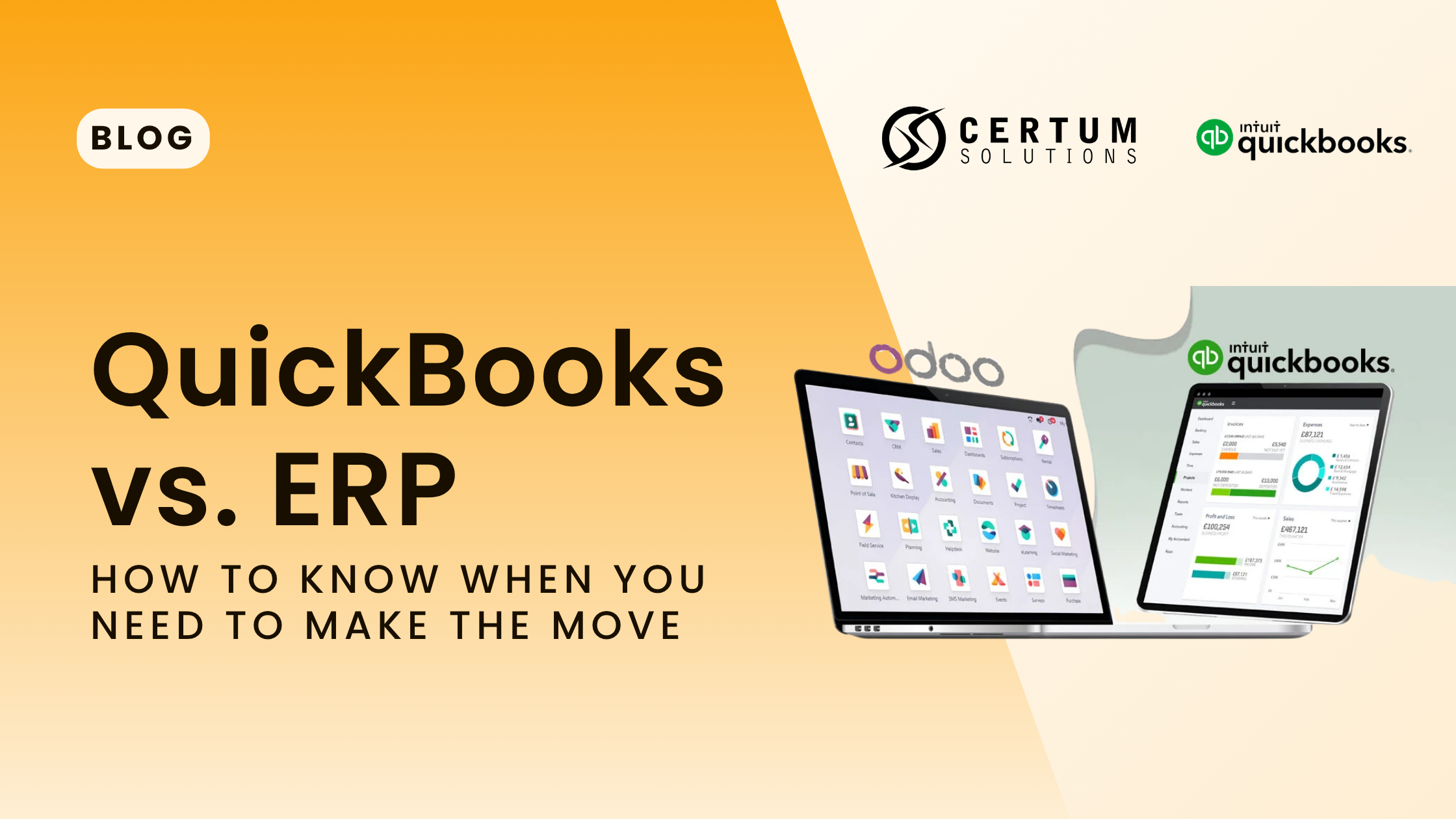
Full enterprise ERP at a higher price and complexity tier. Worth considering only when you've genuinely outgrown the mid-market options above. Compare on our ERP software page.
Honest Guidance
Who Should NOT Switch to Odoo
Three businesses that should not move to Odoo, stated plainly:
Simple service businesses under ~$1M in revenue. Odoo is more system than you need. QuickBooks Online or Xero will close your books faster, cost less, and require no implementation project. Switching adds complexity without adding value.
Businesses whose real problem is a messy ledger. If your QuickBooks pain is actually a cleanup or configuration issue, migrating to Odoo carries that mess into a harder system. Fix the books first — then re-evaluate whether you even still need to switch. Often you won't.
Teams without capacity to maintain it. Odoo rewards businesses that invest in keeping configuration and accounting clean. Without internal capacity or an outside accountant to own the ledger, an Odoo deployment drifts into the same disconnected mess it was meant to solve.
How We Help
Where Certum Fits in an Odoo Decision
We're an accounting firm in Odoo's Find an Accountant directory — not an implementation reseller. That means our advice on whether to adopt Odoo isn't tied to selling you the build. Here's how we help, before and after a decision.
01
Evaluate Honestly
We compare Odoo against QuickBooks, IES, Xero, and Zoho for your actual operations — and recommend staying put when that's right.
02
Own the Accounting Workstream
If you proceed, we handle COA design, tax setup, and clean opening balances alongside your implementation partner.
03
Keep the Books Clean
Post go-live, we run monthly bookkeeping and month-end close inside Odoo so the ledger stays accurate.
04
Advise as You Grow
Fractional CFO support, margin analysis, and reporting built on Odoo data you can finally trust.
Why Trust This Evaluation
We Have No Reason to Push You Toward Odoo
Firms that only implement Odoo answer every "should I switch" question the same way. Certum Solutions is a QuickBooks Elite Partner (top 2% of ProAdvisors, 13 named Intuit awards), a Xero Bronze Partner, a Zoho Silver Partner, and a firm listed in Odoo's accountant directory. Because we work in all of them and sell none of them as an implementation, our recommendation tracks your operations, not our pipeline.
Founded by Katherine "Katie" Bunschoten with 20+ years in accounting systems, Certum has served 500+ businesses nationwide from Monroe, NC. When we say Odoo is right for you, it's a judgment against real alternatives — and when it isn't, we'll map the better path.
"They are transparent and honest. Unlike other companies that will simply nod and say they can do it all, Certum will ensure that the client is aware of limitations or incompatibilities early on, further helping establish expectations before the project is afoot."
— James Frey, IT Consulting Business Review
Reviews
What Our Clients Say About Working With Certum
“Certum is a very efficient and helpful business in all areas needed. Katherine and Sarah were extremely helpful and knowledgeable! They are very great people! I would recommend them hands down to anyone who needs help with their books and/or business! Certum is a great company!!”
— Sherena T.“Highly recommend Certum Solutions for any business needing expert accounting support - especially if Odoo is used. Unlike other firms we scouted—who were often unresponsive or pushed unnecessary services—Certum was professional, transparent, and fairly priced from day one. During our onboarding, they brought in a full team of experts (including Odoo and project management specialists) to ensure our specific needs were met. They make the financial side of the business seamless so we can focus on our operations.”
— Brahim B.“Great attention to detail. Friendly staff and quality service. When we first came to Certum Solutions our company was growing faster than our books could keep up. They caught us up to speed and help keep us ahead of the game and out of trouble. Great company and I would recommend them highly.”
— Mike J.Odoo Related Resources
FAQ
Evaluating Odoo ERP: Common Questions, Answered
-
Odoo is a capable, modular ERP that's a strong fit for businesses roughly $1M–$30M in revenue with operational complexity — manufacturing, distribution, multi-channel e-commerce, or multi-entity structures — that want accounting, inventory, sales, and CRM in one connected system. It's less of a fit for simple service businesses, who usually get a faster close and lower cost from QuickBooks Online or Xero. Odoo's quality in practice depends heavily on configuration, because its accounting entries are posted automatically from operational modules.
-
Neither is universally better — they solve different problems. QuickBooks (Online or Enterprise) is accounting-first software that's faster to run, cheaper to maintain, and ideal when accounting is your primary need. Odoo is an ERP where accounting is one module among many, making it the better choice when you need inventory, manufacturing, CRM, and sales tightly connected to your books. As a firm that works in both, Certum's rule of thumb: if your pain is accounting, stay on QuickBooks; if your pain is disconnected operations feeding bad numbers, evaluate Odoo or a comparable ERP.
-
Odoo's software is priced per user per month and varies by plan (One App Free, Standard, and Custom tiers), so a small team's software cost is modest. The larger cost is implementation and ongoing maintenance: configuring modules, migrating data, training staff, and keeping the accounting clean. Total cost of ownership for a real multi-module Odoo deployment is typically several times the software subscription. Budget for the people, not just the license.
-
For US businesses weighing Odoo, the realistic alternatives are: QuickBooks Enterprise (ERP-lite with advanced inventory and job costing), Intuit Enterprise Suite (multi-entity financials, HR, and payroll for businesses outgrowing QuickBooks), Zoho One (a comparable all-in-one suite), and NetSuite (full enterprise ERP at a higher price point). The right comparison depends on whether your core need is accounting depth, operational integration, or multi-entity consolidation.
-
Switch only if QuickBooks can no longer connect your operations to your books — for example, inventory, manufacturing, or e-commerce data that lives in separate systems and forces manual re-entry. If your QuickBooks pain is really a configuration or cleanup problem, a migration to Odoo will carry that mess into a more complex system. Certum reviews both before recommending a switch, and frequently recommends staying on QuickBooks with better setup instead.
-
For most small service businesses under roughly $1M in revenue, no — Odoo is more system than they need, and maintaining it costs more than the value it returns. Odoo becomes worth it when operational complexity (inventory, manufacturing, multiple sales channels, or multiple entities) means a simpler accounting tool leaves you stitching systems together by hand. Certum will tell you honestly which side of that line you're on.
-
Certum Solutions is an accounting firm listed in Odoo's Find an Accountant directory, not an Odoo implementation reseller. We handle the accounting side of an Odoo deployment — chart of accounts design, tax configuration, opening balances, month-end close, cleanup, and ongoing bookkeeping — and coordinate with your chosen implementation partner on the full ERP build. For ongoing Odoo accounting support, see our Odoo accountant services.
-
A focused single-module Odoo rollout can take a few weeks, while a multi-module deployment across accounting, inventory, manufacturing, and sales commonly runs three to six months or more, depending on data migration, customization, and team training. The accounting workstream — clean opening balances, correct tax setup, and a reliable close — should run in parallel from the start, not be bolted on at the end.
-
Odoo is a full ERP suite that includes a CRM as one of its modules. The ERP spans accounting, inventory, manufacturing, purchasing, HR, e-commerce, and more, all sharing one database. The CRM is the sales-pipeline piece within that larger system, which is why companies often adopt Odoo specifically to connect their CRM and sales activity directly to their accounting.
-
Beyond the per-user subscription, ongoing Odoo costs include hosting (if self-managed or on Odoo.sh), periodic version upgrades, and — the one most businesses underestimate — accounting maintenance to keep the books accurate as operational modules post into them. Many Odoo users hire an Odoo-fluent accountant for monthly bookkeeping and close rather than burdening internal staff with both operations and the ledger.
-
Yes — this is exactly what Certum does best. As a QuickBooks Elite Partner, Xero Bronze Partner, Zoho Silver Partner, and a firm in Odoo's accountant directory, we evaluate your operations against all of them and give a vendor-neutral recommendation. The free 30-minute consultation ends with a clear answer on which platform fits, including the option to stay where you are.
Keep Reading
Related Resources & Next Steps
Odoo Accountant Services
Ongoing bookkeeping & close in Odoo
Accounting & ERP Software Comparison
Odoo vs. QuickBooks vs. Xero vs. Zoho
Ongoing Accounting & CAS
Senior accountant oversight
Intro to Odoo ERP
What the platform actually covers
QuickBooks Enterprise
ERP-lite with advanced inventory
Intuit Enterprise Suite
Multi-entity alternative to Odoo
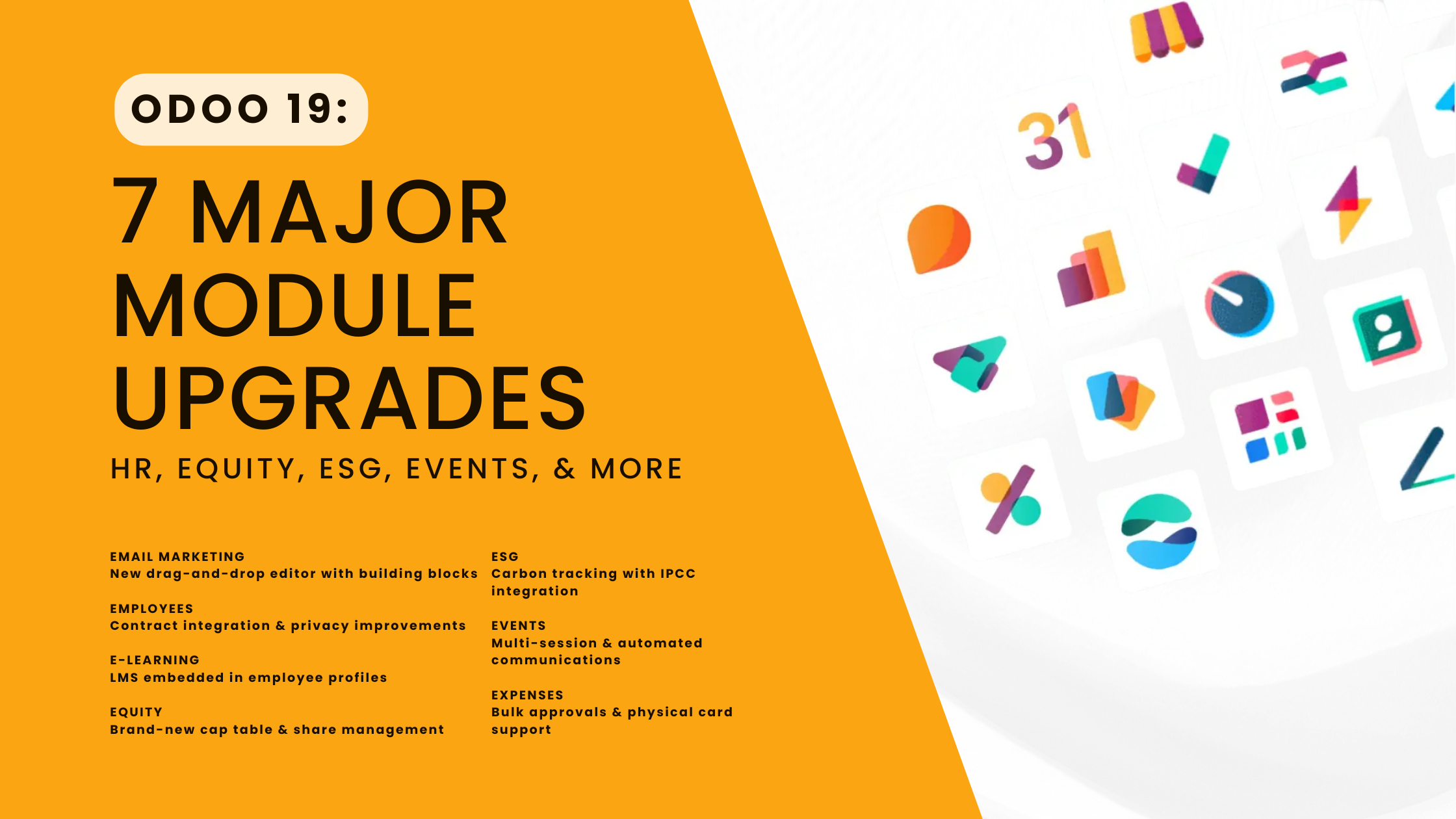
Odoo 19: What's New
Feature overview for current users
Find My Software Quiz
2-minute platform fit check
Don't Buy an ERP You Don't Need
One free call. A straight, vendor-neutral answer about whether Odoo fits — even if the answer is "stay where you are."