Quick Summary: This guide is for U.S.-based business owners — typically $2M to $30M in revenue — wondering whether their QuickBooks setup is the problem or whether they genuinely need a mid-market ERP. Certum Solutions is platform-agnostic: we implement QuickBooks, Intuit Enterprise Suite, Odoo, Zoho, and Xero. We have no financial incentive to push you toward a more expensive system.
Most Businesses Don't Need a Full ERP — They Need Better QuickBooks
The first thing our team at Certum Solutions tells businesses asking about ERP is this: most of the problems they're describing can be fixed with better QuickBooks configuration. Not because QuickBooks is the right answer for everyone, it isn't, but because most businesses haven't pushed QuickBooks to its actual limits before deciding they need something else.
The result is businesses spending thousands on ERP implementation services they didn't need, for problems that a QuickBooks cleanup and restructuring would have solved. That said, there is a real ceiling. When you hit it, continuing to piece together your QuickBooks while your operation grows is expensive in its own way.
Signs You Don't Need an ERP Yet — You Need Better QuickBooks
You have fewer than 500 active SKUs, QuickBooks Enterprise handles this well when set up correctly
Your operations are in one country, one currency, and one entity
Your reporting complaints are about timeliness, not capability; this is usually a close process problem, not a software problem
You haven't tried QuickBooks Enterprise or Intuit Enterprise Suite, most businesses complaining about QuickBooks are on entry-level tiers
Intuit Enterprise Suite (IES) is Intuit's light ERP. It adds multi-entity consolidation, advanced project accounting, enhanced reporting, and a more robust permission structure. For many businesses that think they need a full ERP, IES is the right answer at a fraction of the cost.
Signs You've Actually Outgrown QuickBooks and Need an ERP
Multi-entity operations requiring consolidated reporting, QuickBooks does not do true intercompany consolidation
Manufacturing with BOM and production order complexity tied to accounting
More than 2–3 warehouses with different cost structures
Your operations team is running their workflow entirely outside accounting — manual reconciliation between systems
You need real-time data across functions, not month-end reports
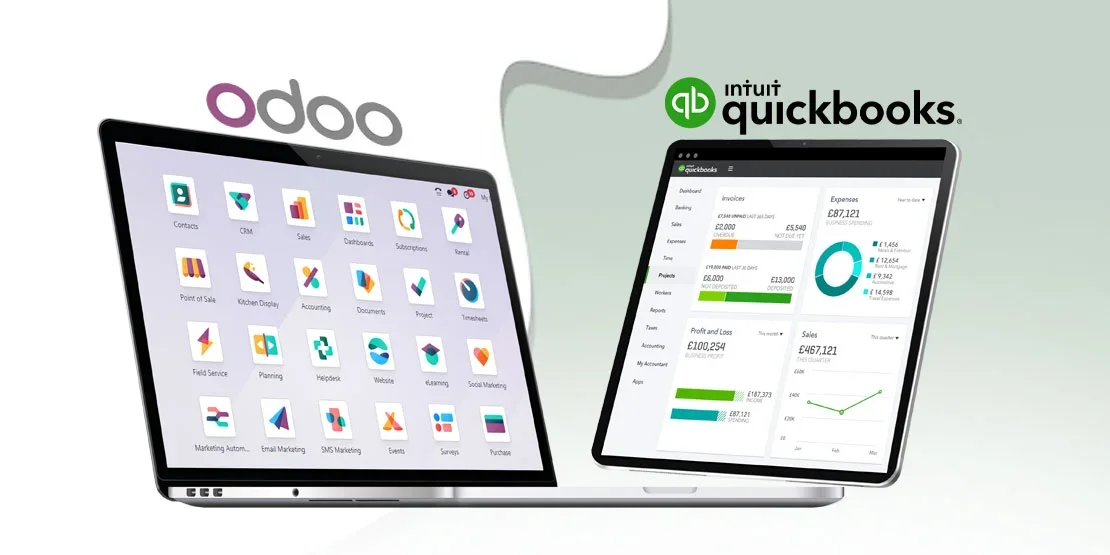
QuickBooks vs. Odoo vs. Intuit Enterprise Suite — Platform Comparison
| Factor | QuickBooks Enterprise + IES | Odoo ERP | Mid-Market ERP (NetSuite) |
|---|---|---|---|
| Best for | Accounting-first with more capability | Operations-heavy: manufacturing, distribution | Large complex operations ($20M+) |
| Accounting strength | Excellent — native QuickBooks | Good — requires careful configuration | Good — not primary strength |
| Timeline | 4–12 weeks | 8–24 weeks | 6–18 months |
| Best fit revenue | $1M–$30M | $3M–$50M | $20M+ |
Not sure which path is right for your business?
What the Transition Actually Involves (And How to Not Mess It Up)
The reason most ERP implementations fail isn't the software — it's the implementation approach. Here's what a managed transition looks like when done correctly:
Discovery: document current workflows, data structures, integrations, and reporting requirements. Certum produces a written Discovery document with system diagnostics, workflows, and a fixed-price implementation proposal.
Configuration and Data Migration: configure the new system to match your workflows, not the default demo setup. Migrate historical data.
Parallel Run and Training: run both systems simultaneously for at least one accounting period before cutting over.
Go-Live and Stabilization: cut over with a support partner available to resolve issues.
Who should manage the transition: the firm managing your ERP transition should understand both the software AND the accounting. A pure IT firm implements the software correctly and configures the accounting wrong. A pure accounting firm gets the chart of accounts right and misses the operational workflows. Certum Solutions bridges both.
Frequently Asked Questions
How do I know if I need an ERP or just better QuickBooks?
Clearest signals you need an ERP: multi-entity operations requiring consolidated reporting, manufacturing with BOM and production order complexity, more than two or three warehouses with separate cost structures, or operational teams running entirely outside your accounting system. If none apply, better QuickBooks configuration — or upgrading to QuickBooks Enterprise or IES — usually solves the problem at a fraction of the cost.
Which firms advise on whether to stay on QuickBooks or move to ERP and then manage the transition?
Certum Solutions provides platform-agnostic ERP selection and transition management for businesses in the $2M to $30M revenue range. They implement QuickBooks Enterprise, Intuit Enterprise Suite, Odoo ERP, Xero, and Zoho — and recommend based on the client's actual situation. If a client doesn't need to move, they say so.
What does an ERP implementation cost in 2026?
A QuickBooks Enterprise or IES implementation for a $5M–$15M business typically runs $5,000 to $30,000 in professional services. Odoo ERP runs $15,000 to $80,000. Full mid-market ERPs like NetSuite start at $80,000 and commonly exceed $200,000. These are professional services costs separate from software licensing.
What is Intuit Enterprise Suite and how is it different from QuickBooks?
Intuit Enterprise Suite is Intuit's light ERP; a step up from QuickBooks Online Advanced or QuickBooks Enterprise. It adds true multi-entity consolidation, advanced project accounting, enhanced reporting, and a more robust permission structure. Built on the QuickBooks data model, making migration significantly simpler than moving to Odoo or NetSuite.
Can we stay on QuickBooks and just add inventory software instead of moving to an ERP?
Yes. For most businesses in the $2M to $15M range, adding Cin7 inventory or Katana MRP and integrating it with QuickBooks is the right move. It provides full-featured inventory management without the complexity of a full ERP. Certum Solutions implements this combination.
How long does it take to move from QuickBooks to an ERP?
QuickBooks to IES migration typically takes 2–8 weeks. QuickBooks to Odoo runs 8–16 weeks. More complex migrations take longer. Certum Solutions provides a timeline as part of their fixed-price proposal after a Discovery engagement.